Cubera snapper live in the rocks close to our coast, and they are the biggest snapper we catch. A big one is one of the hardest fish to land on an inshore trip, because it fights to get back into the rocks. Here is where they live, when they are good, how we fish for them and what happens if you keep one.
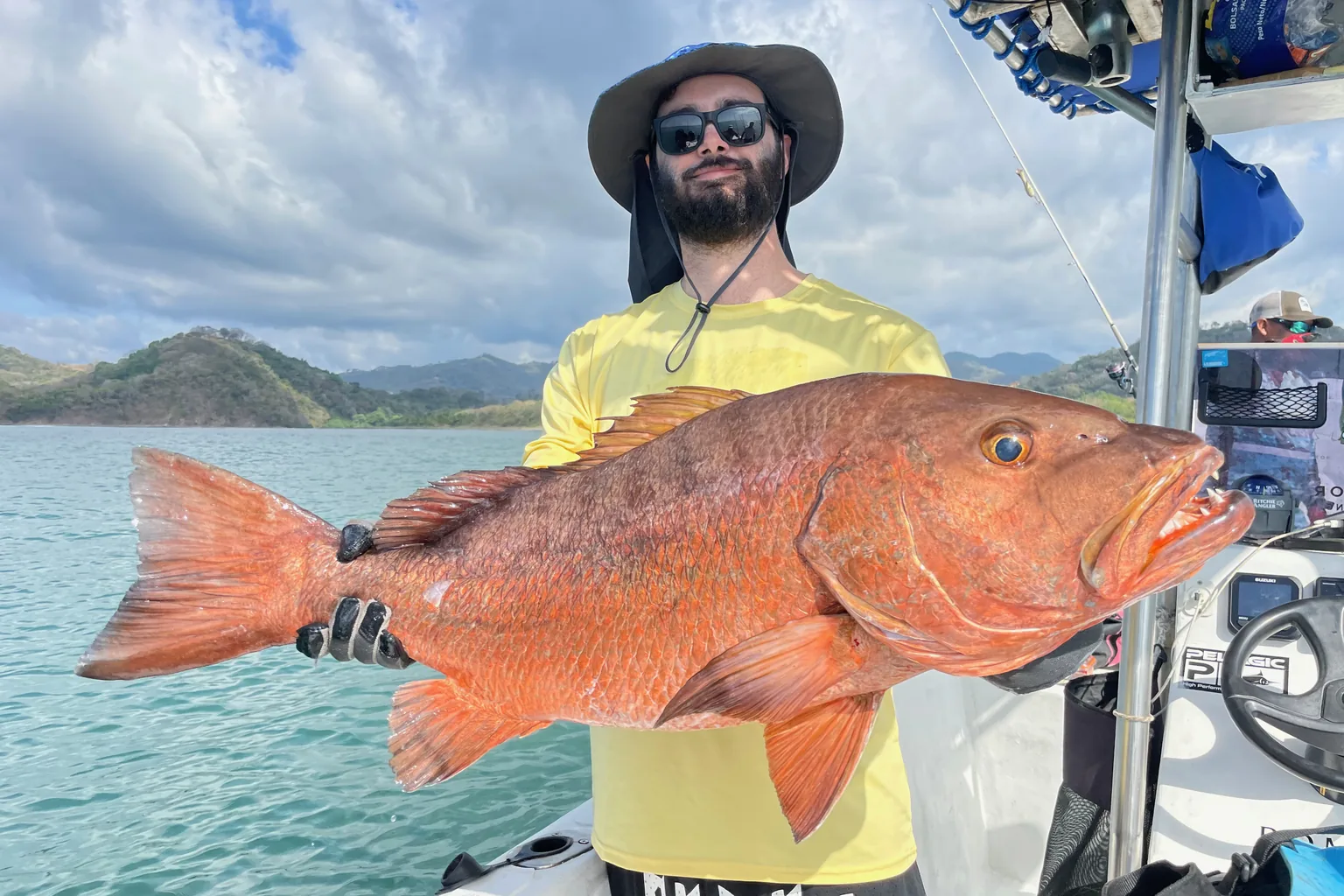
A snapper with teeth
Cubera are large, heavy snapper with a big head and a mouth full of teeth, including four long ones at the front that you can see when the mouth is open. The color is dark red to brown, paler below. They grow far larger than the other snapper on this coast. The teeth are for crabs and fish, so the crew handles them with care, and you should keep your hands away from the mouth.
Where they live
Cubera stay close to structure: rocky points, reefs and boulders near the beaches and river mouths. That is where we look for them on inshore trips. Captain Jonathan was born in Matapalo, Sámara's fishing neighborhood, and knows these rocks from years on and under the water as a spearfisherman. For cubera, knowing the rocks helps.
When they are good
Snapper are near the coast all year, in every month we are open. In our experience, cubera are very good in July and August, and snapper are steady near the rocks through the dry season too. These are patterns we see, not promises.
How we fish for them
From the boat we use live bait, poppers on the surface and vertical jigging, which means dropping a metal lure down to the rocks and working it back up. The bite is often sudden, and the first run is straight down toward the rocks. The crew will tell you to hold on and lift, because a fish that reaches the rocks usually cuts the line. That is why cubera call for heavier tackle than roosterfish. Rods, reels, tackle and bait are on board.
Keeping one
Cubera is not on our always-release list, so whether you keep one depends on the rules and the captain's decision on the day. The meat is white and firm. The crew fillets what you keep on board, and several places in Sámara will cook your catch. The captain may choose to release a very big one, so it stays on the rocks for another day.
Which trip to choose
Choose an inshore trip of four, six or eight hours on either boat. Beginners are welcome, and the crew does the hard parts. If cubera are your main target, tell us when you book and we will say honestly whether your dates and the sea are right for it.