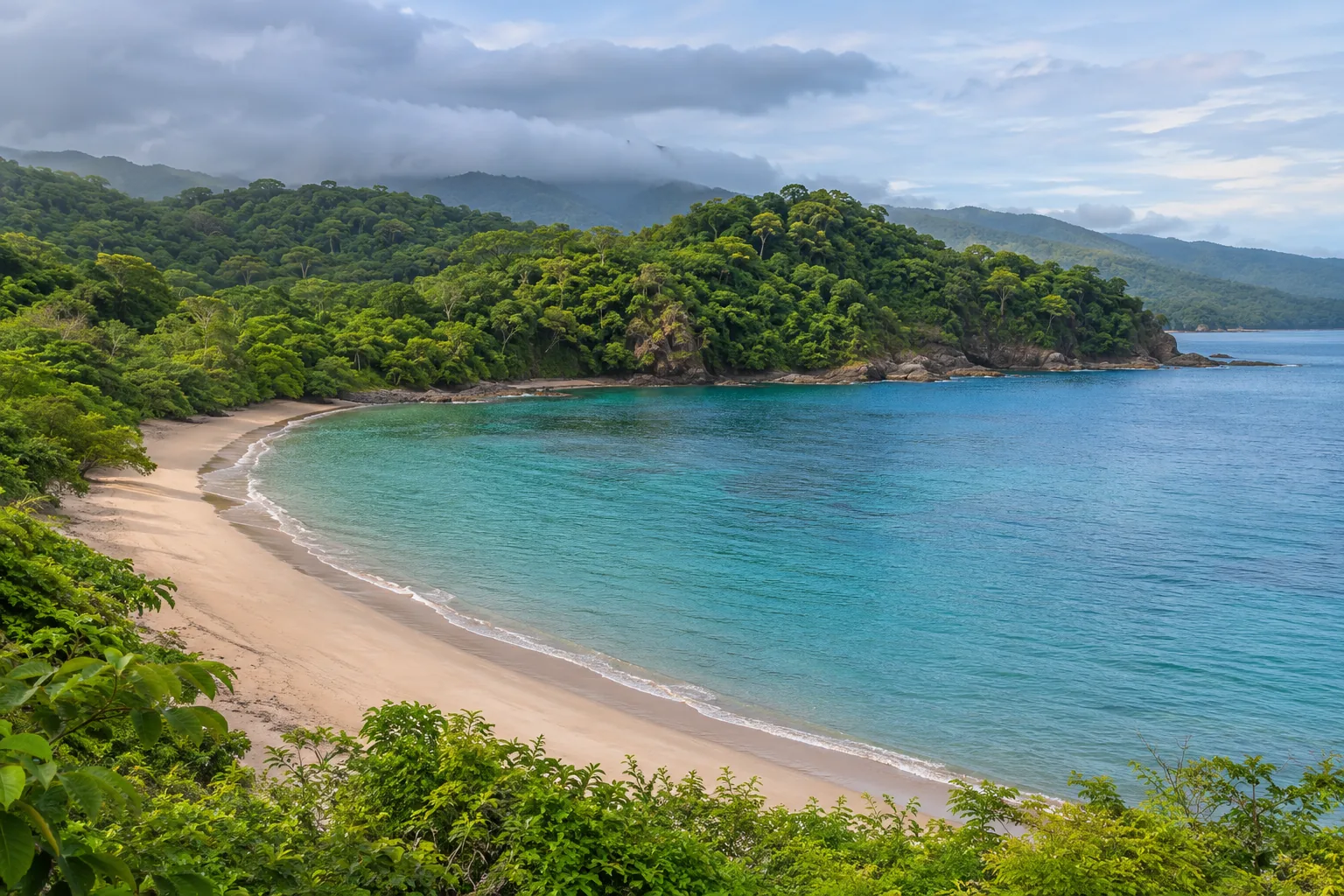
From May to November, Costa Rica calls its rainy season the green season. Many visitors avoid it, which is a mistake for fishing. The mornings are often the calmest of the year, the fish are strong and the beaches are quiet. Here is what the green season is really like off Sámara, and how we fish it.
What the green season is
The rain usually comes in the afternoon, after a sunny morning. In May the first rains arrive and the brown hills turn green within weeks. June, July and August bring sunny mornings and afternoon showers. September and October are the wettest months on this coast. By November the rain eases and the hills are still green: a good, quiet month before the high season.
When we fish and when we do not
Trips run in the morning and in the afternoon whenever the calendar is open, weather permitting. Mornings are often the sunnier half of the day. We take a short break from mid-May to the end of June, and in September and October our boats are out of the water, to keep them safe through the wettest weeks. The season usually reopens in November. Dates move each year, so check the booking calendar.
What we catch
In our experience, July and August are a quiet secret: the sea is often calm, tuna are strong, sailfish are good, and August can bring good marlin fishing. Mahi-mahi are around from March and strong through the green season and again in November. Near the coast, cubera snapper are very good in July and August, and roosterfish, snapper and jacks are here all year. Patterns we see, not promises.
What a green season day looks like
Morning trips leave at 07:30, more often than not under a clear sky. The sea is often calmer than in the windy weeks of January, and there are fewer boats out. By early afternoon, clouds build over the hills. A morning half day limits your time in the afternoon; a six-hour trip extends into the early afternoon. The captain watches the sky and decides on the day.
Why fewer visitors is good
The green season is quieter in Sámara: easier to book the dates you want, easier to find a table for your catch, and the town feels like itself. Places to stay are often cheaper too. For anglers, it means the boat and the crew's full attention on the day you want.
Which trip to choose
Offshore for tuna, mahi-mahi and sailfish on Sol de Oro, 4.5 or six hours. Inshore for cubera, roosterfish and jacks on either boat. If you are coming in July or August, tell us your dates and we will say what we are seeing.