In Costa Rica this fish is called dorado, the golden one. In English it is mahi-mahi, and sometimes dolphinfish, though it has nothing to do with dolphins. We catch it on our offshore trips. Here is what it looks like, when it is around Sámara, how we fish for it, and what happens if you want to eat one.
One fish, three names
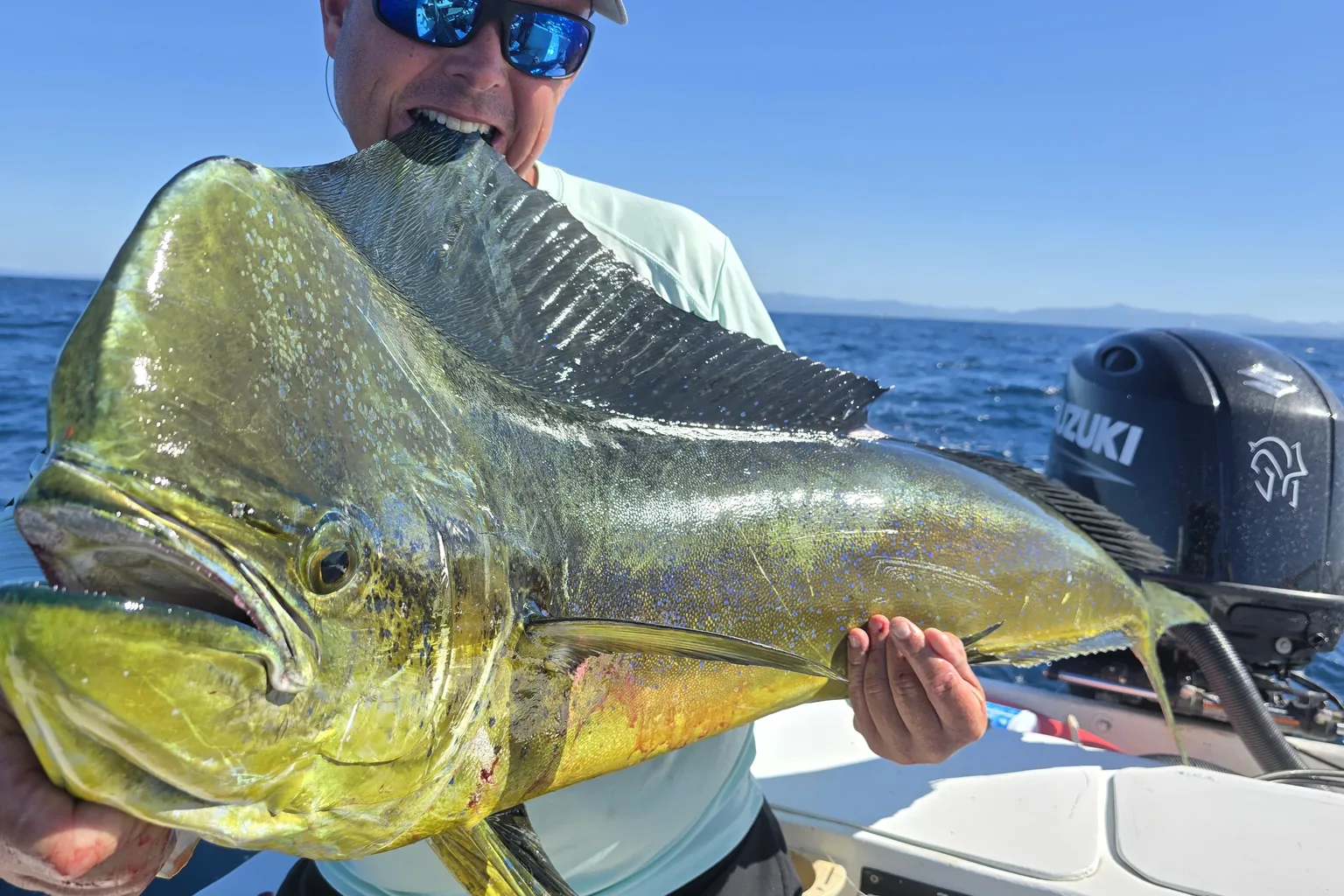
Mahi-mahi, dorado and dolphinfish are the same fish. It lives in warm, open water around the world, close to the surface. It is one of the most colorful fish in the sea: bright blue and green on the back, gold on the sides, with small dark spots. The colors flash while the fish is alive and fade soon after it dies, so the best colors are the ones you see next to the boat. A male has a tall, flat forehead. A female has a rounder head.
When they are around Sámara
In our experience, mahi-mahi start to arrive in March and are strongest in the green season, from May to August, and again in November. We take a short break from mid-May to the end of June, and our boats are out of the water in September and October. These are patterns we see, not promises. Our month-by-month guide for Sámara has the details.
Where to look for them
Mahi-mahi like floating things. Small fish shelter under logs, branches, lines of weed and buoys, and the mahi come to hunt them. Out at the drop-offs, the captain watches for floating objects, weed lines where currents meet, and sea birds working the surface. Younger fish often travel in groups, and when one is hooked, others may follow it to the boat.
How we fish for them
Mahi-mahi are part of our offshore day on Sol de Oro, 14 to 25 miles out. Most of the time we troll, pulling ballyhoo and lures behind the moving boat. When fish come up to the surface, there may be a chance to switch to a popper or a fly rod. You don't need experience: when a fish bites, the crew puts the rod in your hands and tells you when to reel. A hooked mahi jumps and changes direction fast, so the fight is full of action.
Keeping one for dinner
Mahi-mahi is not on our always-release list. Whether you keep one depends on the rules and the captain's decision on the day. The meat is firm and mild, and several places in Sámara will cook your catch. The crew fillets what you keep on board. If you want to take fillets back to where you are staying, a soft cooler bag is useful.
Which trip to choose
Choose an offshore trip: a half day of 4.5 hours, a three-quarter day of six hours or a full day of eight hours, with lunch included on the full day. On the same day you may also see sailfish, marlin or tuna. More hours give you more time at the drop-offs, not a promise of more fish. If mahi-mahi are the main reason for your trip, tell us when you book, and we will say honestly whether your dates are realistic.