Most offshore fishing in Costa Rica is trolling. If you have never done it, the word can sound strange. Here is what it means, what you will see on the boat, and what you do when a fish bites.
What trolling is
Trolling means pulling baits or lures behind a moving boat. The boat runs slowly, and the baits move through the water like small fish swimming near the surface. Big ocean fish, like sailfish, marlin, tuna and mahi-mahi, hunt fish like these, so they chase the baits.
Baits and lures
On our offshore trips we use ballyhoo, a small, thin baitfish, and artificial lures. A lure is a fake fish, often with a bright skirt that moves in the water. The captain changes baits, colors and speed through the day, looking for what the fish want.
Outriggers: more lines, no tangles
You will see two long poles on the sides of Sol de Oro. These are outriggers. They hold some lines far out to the sides, so the boat can pull several baits at once without the lines tangling. When a fish takes a bait on an outrigger, the line drops free and the fight moves to the rod.
Reading the water
The baits behind the boat are called the spread. The crew places them at different distances, so they look like a small group of fish. A fish finder shows the depth and what is below the boat. Captains also watch for sea birds and changes in the water, because these often show where fish are feeding.
When a fish bites
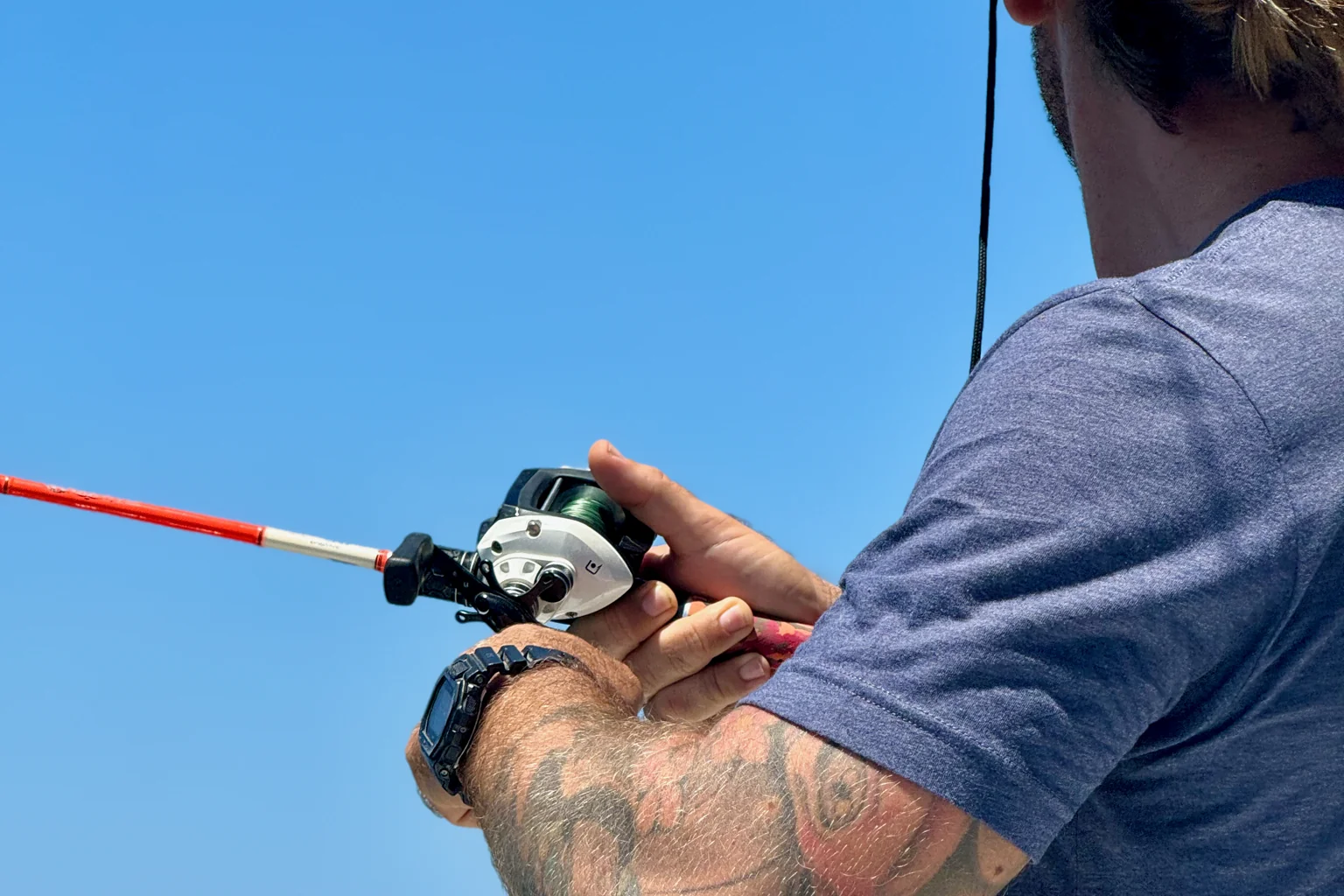
Things happen fast. The crew calls out, takes the right rod and puts it in your hands. They clear the other lines so they don't tangle, and tell you where to stand and when to reel. You don't need experience: the crew guides every step.
Where we troll
We troll offshore, 14 to 25 miles out at the drop-offs, where the sea floor falls away into deep water. Offshore trips run on Sol de Oro, our 28 ft boat, for 4.5, six or eight hours. When fish come up to the surface, there may be a chance to switch to a popper or a fly rod.