Not every fish is at the surface. When the fish are down near the rocks, the crew switches to vertical jigging. It is simple to learn, and it can reach fish that are not feeding at the surface. Here is what a jig is, how you fish it and what it catches.
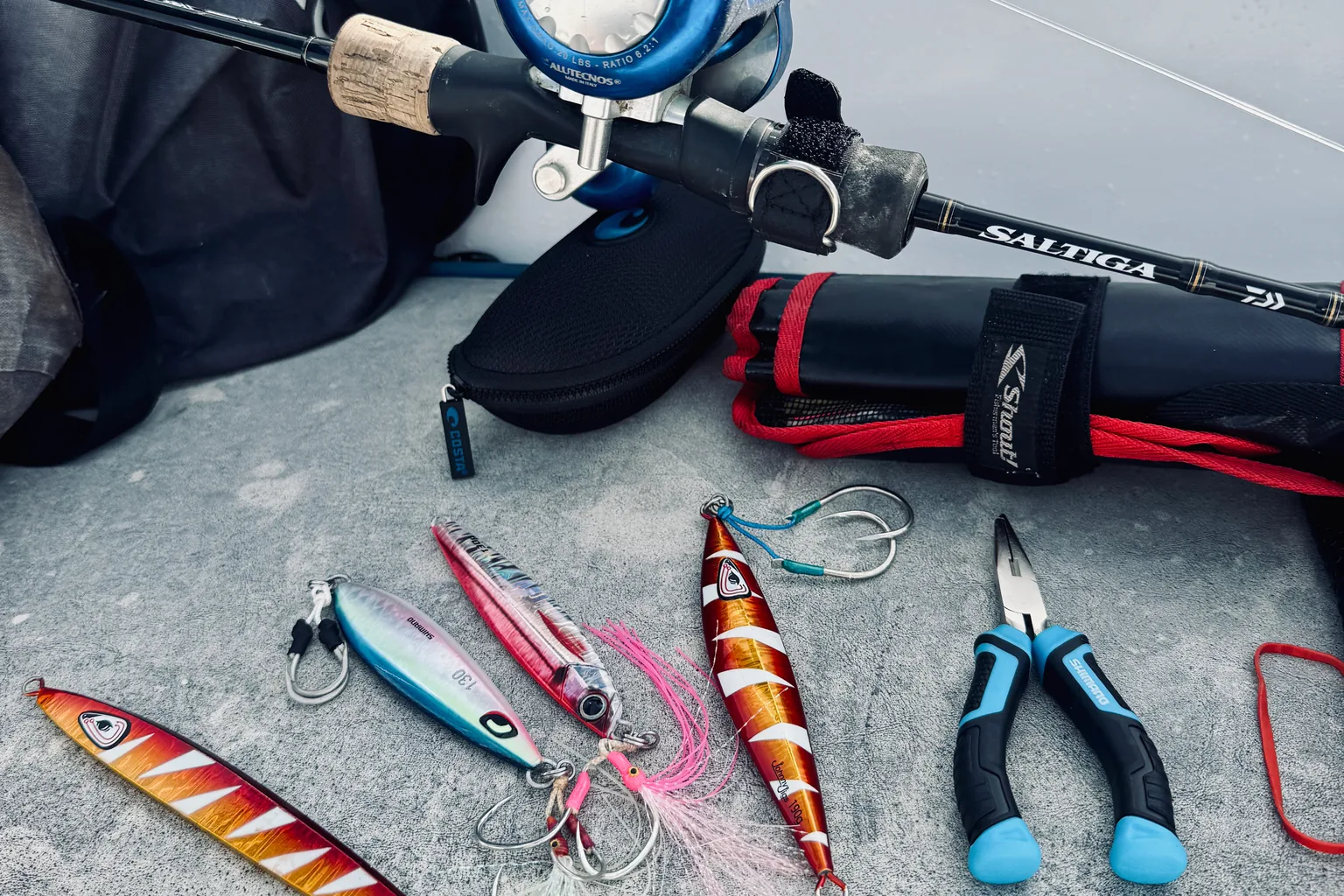
What a jig is
A jig is a heavy metal lure, long and narrow, shaped a little like a small fish. It does not float. Your rod movements lift it, and its shape helps it flutter or dart as it falls. Jigs come in different weights for different depths and currents, and the crew picks the one for the day.
How you fish it
The boat stops over rocks or a drop in the sea floor, which the captain finds with the fish finder. You drop the jig straight down to the bottom, then lift the rod and reel at the same time, so the jig jumps up through the water, then let it fall again. Lift, reel, fall. Many bites come while the jig is falling, so you keep a little tension on the line. When you feel a pull, lift the rod and start reeling.
What it catches
Inshore, jigging brings up cubera snapper, grouper and amberjack from the rocks, and sometimes jacks and roosterfish. Jigging lets us reach these fish when they are holding deeper. Snapper and grouper are not on our always-release list, so what you keep follows the rules and the captain's decision; roosterfish and jacks always go back.
Why the crew switches to it
The crew mixes popping, live bait, fly fishing and jigging to suit the day. When the surface is quiet, when the fish show deep on the finder, or when the sea makes casting hard, jigging keeps you fishing. It also gives your arms a different kind of work from popping, which many guests welcome by the middle of a trip.
What to expect
Jigging is physical in short bursts. The fall is easy; the lift and reel is work. Bites are sudden and the first run is usually straight down toward the rocks, so the crew will tell you to keep lifting. A fish that reaches the rocks often cuts the line, and that is part of it.
Which trip to choose
Jigging is part of our inshore trips of four, six or eight hours on either boat. Beginners are welcome, and rods, reels, tackle and jigs are on board. Sol de Oro and Acuarelas both carry a fish finder, which helps the captain find structure and fish below the boat.