Yellowfin tuna are among the strongest fish you can hook on a rod. We catch them on offshore trips out of Sámara, and they are one of the few fish you may take home for dinner. Here is how to recognize one, when they are around, how we find them and what the fight is like.
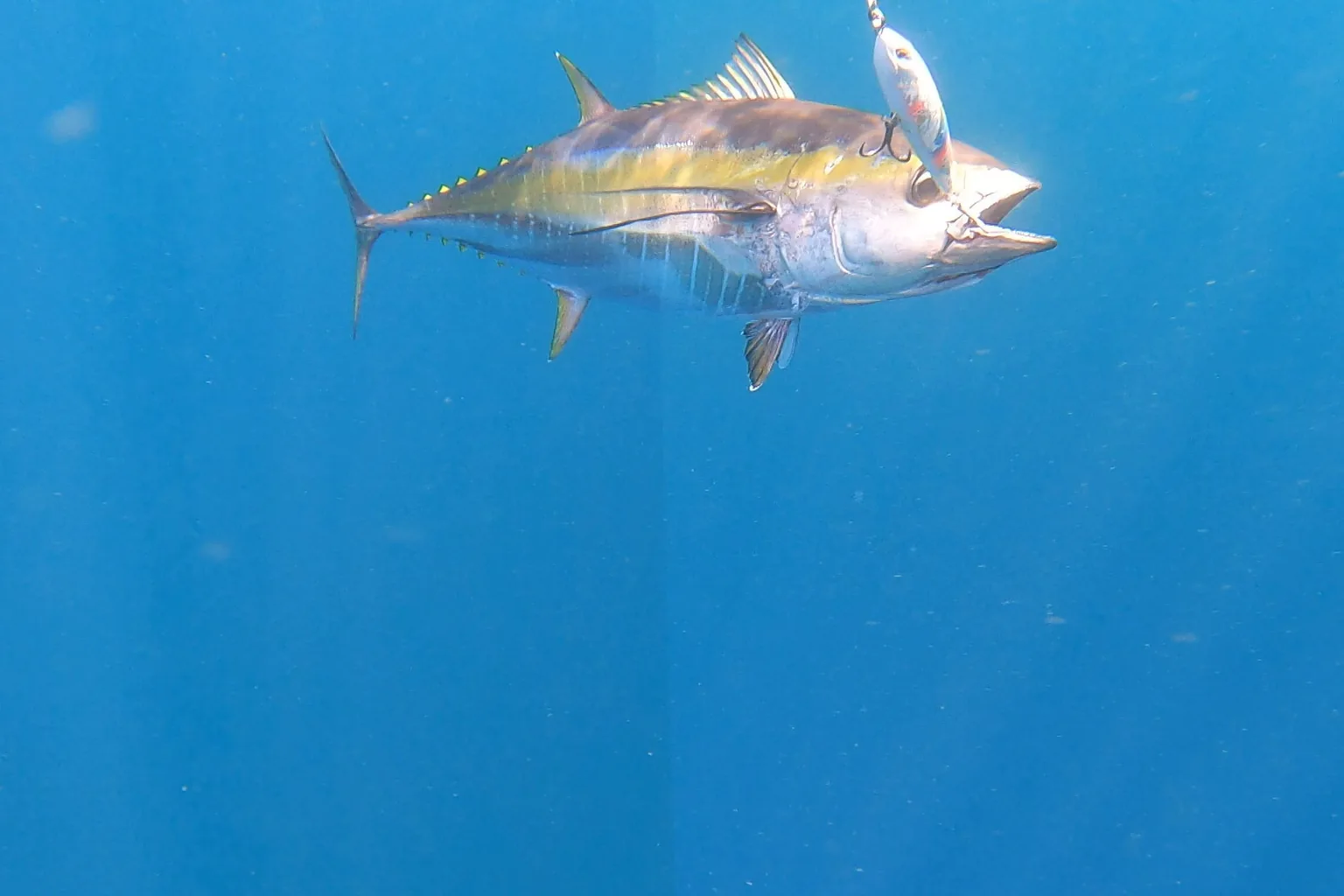
How to recognize a yellowfin
Yellowfin tuna are built for speed: a thick, torpedo-shaped body, a dark blue back and a silver belly, with a band of gold along the side. The name comes from the long, curved yellow fins on the back and belly, which grow longer as the fish gets bigger. Small yellow fins run along the tail. Yellowfin are the tuna we fish for on our offshore trips.
When they are around Sámara
In our experience, yellowfin are around from December to February and strongest in the green season, from May to August, when the sea is often calm. We take a short break from mid-May to the end of June, and the boats are out of the water in September and October. Tuna move with the bait and the currents, so these are patterns we see, not promises.
Dolphins, birds and tuna
On this coast, yellowfin tuna often travel with dolphins. Yellowfin often swim beneath dolphin schools in this part of the Pacific, so a pod of dolphins moving with purpose is a useful clue. Sea birds diving on the surface are another sign. On the run out and at the drop-offs, the captain and crew watch for both, and a fish finder shows what is under the boat.
How we fish for them
Tuna are part of our offshore day on Sol de Oro, 14 to 25 miles out. We troll ballyhoo and lures, and when tuna are feeding at the surface there may be a chance to cast a popper or a fly. Sol de Oro carries tuna tubes, which keep small live baits swimming in fresh seawater, and a live well. The crew sets everything up and puts the rod in your hands when a fish bites.
The fight
A hooked yellowfin is known for deep runs and powerful circles under the boat, and the bigger the fish, the longer it takes. The crew shows you how to hold the rod, use your legs and reel when the fish gives you line. Take turns in your group, because arms get tired. Not every fish reaches the boat, and that is part of fishing.
Keeping one for dinner
Tuna is not on our always-release list, so whether you keep one depends on the rules and the captain's decision on the day. The meat is red and firm, good raw, seared or grilled. The crew fillets what you keep on board, and several places in Sámara will cook your catch. A soft cooler bag is useful if you want to take fillets back to where you are staying.
Which trip to choose
Choose an offshore trip of 4.5, six or eight hours. For tuna, a longer day gives more time to find the dolphins and birds that show where they are, though more hours never promise more fish. Tell us when you book if tuna are your main target, and we will say honestly whether your dates are realistic.